Shooting range membership software helps range operators manage membership tiers, recurring payments, customer benefits, renewals, retail discounts, and activity records in one system. When these functions connect directly with the point of sale, employees spend less time checking spreadsheets or switching platforms. The business gains more reliable recurring revenue, while members receive the correct benefits every time they visit.
Why Do Memberships Matter for Shooting Range Revenue?
Memberships can create predictable income, encourage repeat visits, and increase the long-term value of each customer. Instead of relying only on individual lane fees, a range can build ongoing relationships that include ammunition, accessories, rentals, training, transfers, and other services.
Jake Newbold, President and CEO of Trident 1 FFL Software, explained the value during an episode of Trigger Point:
“Memberships can provide predictable recurring revenue and a higher customer lifetime value.”
The National Shooting Sports Foundation has also highlighted recurring memberships as an important revenue source for range-retailer businesses.
The challenge is keeping administrative work under control. Manual billing, disconnected customer records, and inconsistent discounts can quickly reduce the margin a membership program creates.
A strong membership system should increase revenue without creating another full-time workload.
What Is a Shooting Range Membership Management System?
A shooting range membership management system is a set of tools used to create plans, enroll customers, schedule payments, assign benefits, manage renewals, and track activity. When these features are built into the POS, membership information can also connect with range visits and retail purchases.
A member profile may include:
- Membership tier
- Enrollment and renewal dates
- Payment status
- Lane or bay privileges
- Guest-pass balances
- Product discounts
- Visit history
- Purchase history
This matters because many ranges also sell firearms and accessories, provide training, conduct transfers, rent equipment, or offer gunsmithing services.
A separate membership platform may process dues, but employees may still need another system to confirm benefits or review purchases. A unified platform creates one reliable customer record.
How Should Shooting Ranges Structure Membership Tiers?
Shooting ranges should create tiers around benefits they can explain clearly and deliver consistently. A bronze, silver, and gold structure often works because customers can quickly understand how access, savings, and exclusivity increase.
A basic tier may offer reduced lane fees or a small retail discount. A mid-level plan could add guest passes, free lane time, priority reservations, or larger discounts. A premium plan might include private-bay access, lockers, transfers, or member-only events.
Daniel Peterson, COO of Trident 1 FFL Software, explained that a membership gives a range a unique product. Two retailers may sell the same firearm and compete on price, but each range controls its own membership package.
Operators may also offer monthly, annual, or lifetime plans. Each option should reflect the cost of the benefits and expected member use.
More tiers do not always mean more revenue. Every plan should have a distinct purpose and be easy for employees to manage.
What Benefits Can a Shooting Range Include?
A shooting range membership can include range access, guest privileges, retail savings, training offers, and exclusive amenities. The best benefits are valuable to customers without creating unnecessary cost or operational pressure.
Common options include:
- Free or discounted lane time
- Priority reservations
- Access to selected bays
- Guest passes
- Ammunition or accessory discounts
- Firearm rental discounts
- Transfer benefits
- Locker access
- Training discounts
- Member-only events
The range should define each benefit before selling the plan. Guest passes, for example, should have clear limits and reset rules.
The POS should attach these benefits directly to the membership tier. Employees should not have to memorize every rule or search through printed notes.
Clear benefits make the program easier to sell and easier to operate.
How Does Recurring Membership Billing Work?
Recurring billing charges members according to the schedule assigned to their plans. The operator creates the membership product, sets the price and billing frequency, defines the benefits, and enrolls the customer. The system then handles future charges according to those rules.
Daniel described this as a “set-it-and-forget-it model.” The range builds the package once, then employees can sell it without recreating the billing setup for each customer.
This reduces reliance on spreadsheets, manual renewal calendars, and repeated payment entry.
Operators should still monitor failed transactions, cancellations, upgrades, downgrades, refunds, and payment disputes. Members should also receive clear information about prices, billing dates, renewals, and cancellation terms.
Recurring billing works best when the customer understands the agreement and the business can quickly see the status of every account.
How Can a Range Reduce Failed Membership Payments?
A range can reduce failed payments by using integrated processing that identifies billing problems and supports eligible card-account updates. Charges may fail when a card expires, is replaced, receives a new number, or is closed.
Visa Account Updater allows participating issuers, acquirers, and qualified merchants to exchange certain updates for recurring payments. These updates may include new account numbers, expiration dates, or closed-account notices.
Mastercard Automatic Billing Updater provides a similar service for recurring and card-on-file payments.
Jake noted that asking an inactive member to provide a new card may remind that customer to cancel. Eligible automatic updates can reduce those unnecessary contacts.
No system can recover every failed payment. The POS should still identify accounts that require employee follow-up.
How Should Payment Information Be Protected?
Payment information should be handled through approved systems that follow recognized security standards. Range operators should know where payment data is processed, whether any information is stored, and what responsibilities belong to the business.
The PCI Security Standards Council establishes technical and operational requirements for businesses that store, process, or transmit payment account data.
Its Small Merchant Guide to Safe Payments also encourages merchants to avoid storing card data unnecessarily and to ask providers about safeguards such as tokenization and encryption.
Employees should never place full card details in notes, spreadsheets, or emails. Sensitive payment information should remain inside approved processing systems.
Secure payment handling protects the business and supports a more reliable recurring-billing process.
How Do Membership Benefits Connect With Retail Sales?
Membership benefits connect with retail sales when the POS identifies the customer and applies the rules assigned to that person’s tier. Discounts on ammunition, accessories, rentals, classes, or transfers can appear during checkout without manual calculations.
This creates consistency. Members receive the benefits they purchased regardless of which employee is working, while the business reduces missed discounts and pricing errors.
Connected purchase records can also support better service. Jake gave the example of a member who bought a rifle but had not purchased an optic. An employee who sees that history may suggest a compatible scope instead of making an unrelated offer.
The goal is not aggressive upselling. It is giving employees enough context to provide relevant recommendations.
Range visits and retail transactions should contribute to the same customer record.
What Member Information Should a Shooting Range Track?
A shooting range should track the information needed to manage the account, apply benefits, process payments, and serve the customer. This may include contact details, membership tier, enrollment date, renewal status, payment condition, visits, discounts, purchases, and guest-pass usage.
Trident 1 FFL Software can begin customer-profile creation through integrated driver’s license scanning. As Jake explained, the scan can populate key fields such as the customer’s name and address.
Profiles may also identify eligible discount categories, including military or law enforcement status, when the business offers those benefits.
Employees should only access information needed for their roles. Duplicate records should also be corrected so visits, payments, benefits, and purchases remain connected to the correct customer.
One complete record is more useful than several incomplete profiles across different systems.
How Can Membership Data Improve Retention?
Membership data helps operators understand how members use the range and whether their accounts need attention. It can reveal frequent visitors, inactive customers, failed renewals, underused benefits, and possible upgrade opportunities.
Useful questions include:
- Which tiers produce reliable revenue?
- Which benefits do members use most?
- Are premium members seeing enough value?
- Do guest passes bring in new customers?
- Are members also buying products or training?
- Which accounts may be at risk of cancellation?
Retention should come from delivering clear value, not simply continuing to charge a customer.
Data helps operators make better decisions, but it does not replace conversations with members. Staff still need to understand why customers join, what they value, and what may cause them to leave.
What Reports Should Membership Software Provide?
Membership software should report on enrollments, recurring revenue, renewals, failed payments, visits, cancellations, benefit use, and member spending. These reports show whether the program is growing and whether each tier supports the business.
Useful reports include:
- Active memberships by tier
- New enrollments
- Monthly recurring revenue
- Renewals and cancellations
- Failed payments
- Upgrades and downgrades
- Visit frequency
- Guest-pass usage
- Benefits redeemed
- Retail purchases by members
Range and retail data should appear in the same reporting environment. A plan may look weak when management reviews membership dues alone but become more valuable when ammunition, rentals, classes, and accessories are included.
Good reporting helps operators adjust pricing, benefits, staffing, and membership terms based on real activity.
Why Should Membership Management Be Native to the POS?
Membership management should be native to the POS because billing, customer profiles, benefits, range visits, and retail purchases all affect one another. Keeping them together reduces duplicate entry, separate logins, conflicting records, manual discounts, and incomplete reports.
Daniel gave operators a clear standard:
“If it’s not native within the system or if it requires you to step outside of the system, then I think you’re in the wrong place.”
Before choosing software, the range should define its membership model. The provider should then demonstrate how the system handles enrollment, billing, renewals, benefits, card changes, retail purchases, and reporting.
Operators should also ask whether important functions are included or require additional tools and fees.
The software should support the business model, not force the range to simplify a strong plan because the platform cannot handle it.
How Does Trident 1 FFL Software Manage Memberships?
Trident 1 FFL Software connects configurable membership plans with recurring billing, customer profiles, range activity, retail discounts, renewals, purchase history, and reporting. The platform is designed around the operational connection between firearm retail and shooting range management.
The Trident 1 FFL Software team first learns how the operator wants the membership program to work. Training can then focus on setting up the required tiers, benefits, billing terms, and customer workflows.
Once configured, employees can assign a customer to the right tier instead of rebuilding the rules during each visit.
The right shooting range membership software should do more than collect dues. It should reduce administrative work, support recurring revenue, apply benefits accurately, and show how each member interacts with the full business.
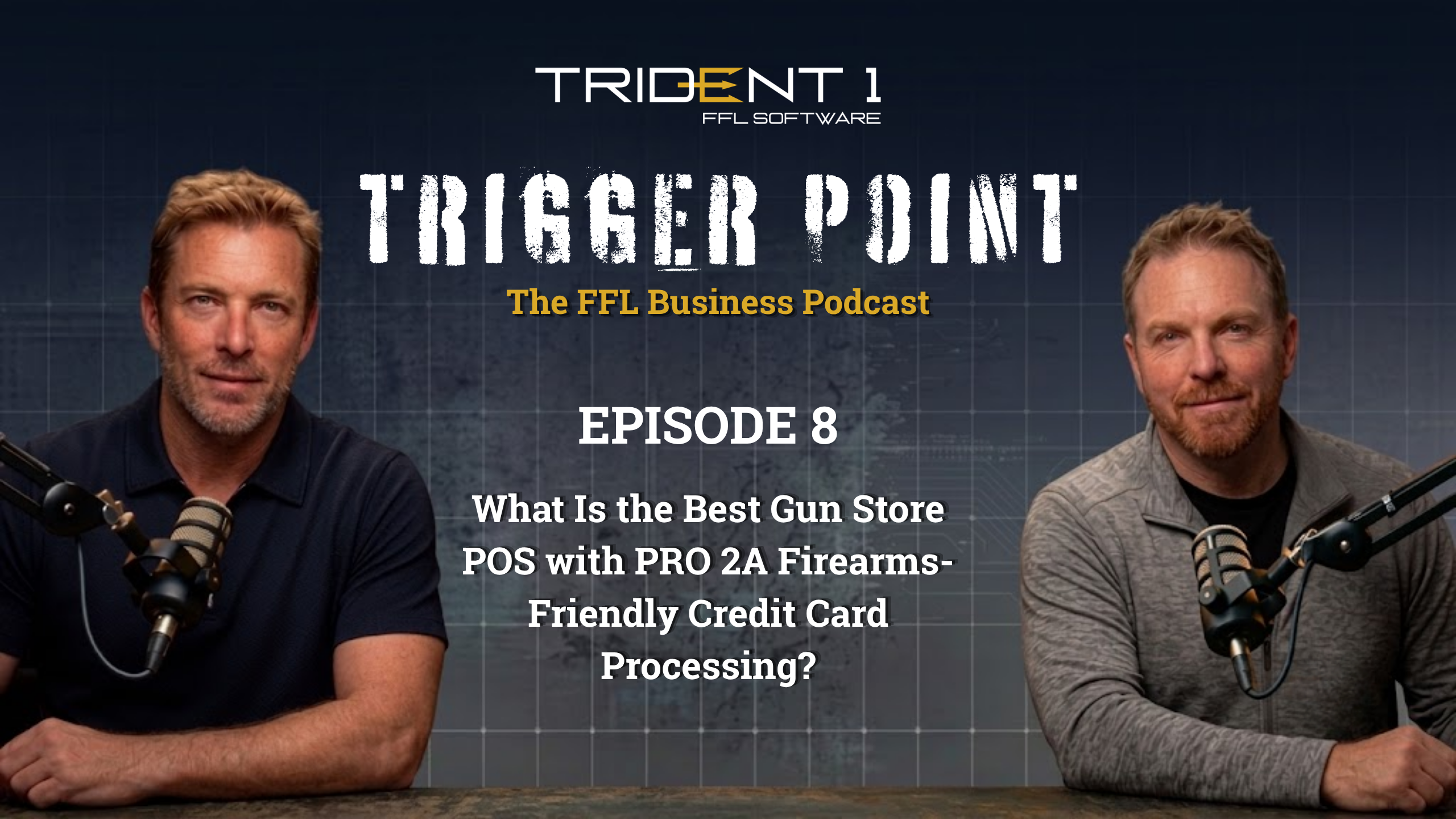
Watch the Full Trigger Point Podcast Episode
Watch the full episode of Trigger Point on YouTube to hear Kevin Wosmansky, Jake Newbold, and Daniel Peterson explain how ranges can build membership tiers, automate recurring billing, connect member benefits with retail sales, and evaluate POS systems. The Trident 1 FFL Software team also covers guest passes, lane access, automatic renewals, customer profiles, payment updates, and reporting. Watch the full conversation for practical guidance from professionals who work directly with firearm retailers and range operators.
Frequently Asked Questions
Can Shooting Range Memberships Renew Automatically?
Yes. A POS system can charge members according to the schedule assigned to the plan. Operators should still monitor failed payments and account changes.
Can Member Discounts Apply to Ammunition and Accessories?
Yes. Eligible product discounts can be assigned to specific tiers when the POS supports membership-based pricing.
Can a Range Offer Monthly and Lifetime Memberships?
Yes. A range can offer different terms when its system supports them. Pricing should reflect the plan length and included benefits.
What Happens When a Member’s Card Expires?
Participating account-updater services may provide eligible new card information. Otherwise, the POS should flag the failed payment for follow-up.
Can Memberships Include Guest Passes?
Yes. Guest passes can be assigned to a tier and tracked through the customer profile.
Should Range and Retail Activity Share One Customer Record?
Yes. One record connects membership status, visits, benefits, purchases, and payments while producing more complete reports.
How Many Membership Tiers Should a Range Offer?
Offer only as many tiers as customers can understand and employees can manage consistently.
What Is the Most Important Membership Software Capability?
Native integration. Billing, benefits, customer profiles, range activity, retail sales, renewals, and reporting should work together.