Paper and digital ATF Form 4473 workflows collect the information needed to document qualifying firearm transfers, but they manage that information differently. Paper depends on handwriting, manual review, and physical filing. An electronic form 4473 uses a guided digital process that can improve legibility, flag incomplete fields, and connect transaction records with other FFL systems. Neither format removes the dealer’s responsibility to complete, review, and retain the form correctly.
For gun stores and shooting ranges, this choice affects more than the customer-facing form. It changes how employees review information, how records are stored, how quickly older transactions can be retrieved, and how easily the sale connects with inventory and compliance tools. Trident 1 FFL Software helps firearm retailers organize those moving parts in one practical workflow while keeping trained employees in control of every required decision.
What Is ATF Form 4473?
ATF Form 4473, the Firearms Transaction Record, captures required information for qualifying firearm transfers from a federal firearms licensee to an unlicensed individual. The buyer or transferee completes the applicable personal and eligibility questions. The FFL completes the dealer sections and uses the information as part of the required transfer process.
The Bureau of Alcohol, Tobacco, Firearms and Explosives publishes the current form and its instructions. Dealers must use the correct version, follow the instructions, and retain the complete record as required. ATF has also proposed further updates, making version control an ongoing operational responsibility.
Form 4473 is not the background check itself. It records information used in the transaction, while NICS or the applicable state process remains a separate step.
What Is the Difference Between Paper and Digital Form 4473?
The main difference is how the information is entered, reviewed, corrected, stored, and connected with other systems. A paper form is completed by hand and checked manually. A digital form guides the customer and employee through an electronic workflow.
| Workflow Area | Paper | Digital |
| Customer entry | Handwritten | Typed on a supported device |
| Legibility | Depends on handwriting | Consistent digital text |
| Missing information | Found through manual review | May be flagged automatically |
| Storage | Physical files | Electronic retention when requirements are met |
| Retrieval | Manual file search | Searchable digital access |
| Integrations | Usually separate | May connect with POS and bound book tools |
How Does a Paper Form 4473 Work?
A paper Form 4473 requires the buyer and dealer to complete the current ATF-approved form by hand, review every applicable response, correct errors according to the instructions, and retain the record in an organized physical filing system.
The tradeoff is manual work. Employees must catch blank fields, compare handwritten information with identification, verify dates and signatures, and complete every dealer section. Poor handwriting can slow the review. Physical records also require secure space and may take longer to retrieve.
Paper is not automatically less compliant. It is simply more dependent on careful human review at every stage.
How Does a Digital Form 4473 Work?
A digital Form 4473 allows the customer and dealer to enter required information through a computer, tablet, terminal, or another supported device. The system can guide users through the applicable sections and prompt them when required information appears to be missing.
ATF offers an eForm 4473 application, while commercial platforms may provide broader retail and compliance integrations. ATF states that its application has been updated for the August 2023 form. Dealers still need to verify the current version and requirements before each rollout or software update.
Electronic completion and storage are separate considerations. Both must meet the requirements that apply to the dealer’s records.
Can Digital Forms Reduce Common 4473 Errors?
Digital workflows can reduce common completion problems by producing readable entries, requiring users to address applicable fields, and alerting employees when information needs another look. These safeguards are especially useful in busy stores with several employees handling transfers.
The ATF Federal Firearms Licensee Quick Reference and Best Practices Guide identifies failure to obtain a complete and correct Form 4473 as a serious compliance issue. It also lists failure to conduct a required background check and failure to obtain proper identification among significant problems.
In the Trigger Point conversation, Trident 1’s Jake Newbold described the goal: “We’ve tried to streamline it as much as possible, take the human error out of it as much as possible, and put checks, balances, and reconciliations within our system.”
Software cannot guarantee a perfect form. Employees must still compare identification, review responses, follow correction procedures, and stop when information does not match. Automation is a safeguard, not a substitute for judgment.
Does Going Digital Make Firearm Transfers Faster?
A digital workflow can improve transaction speed by reducing illegible entries, repeated data entry, missed fields, and time spent moving between disconnected systems. The benefit comes from a smoother process, not from rushing the customer or skipping review.
Customers can enter information on a supported device. Employees can review typed responses instead of interpreting handwriting. When the point of sale, Form 4473 workflow, electronic bound book, and background-check tools are connected, staff may spend less time entering the same information in several places.
Timing still depends on identification issues, background-check responses, state requirements, waiting periods, and store procedures.
How Does the Format Affect the Customer Experience?
Digital completion can give customers a clearer and more guided experience at the counter. Prompts can identify unanswered questions, typed fields are easier to review, and customers may be less likely to restart because of a preventable omission.
Stores should also help customers who are uncomfortable with technology or have accessibility needs. Employees can explain how to navigate the system and direct customers to the official instructions, but they should not answer eligibility questions for them.
How Are Digital Forms Stored and Retrieved?
FFLs may retain Forms 4473 electronically when they meet the conditions established by ATF. Digital storage can reduce physical filing demands and improve retrieval, but the dealer needs secure access, readable records, reliable backups, and a documented contingency plan.
ATF Ruling 2022-01 authorizes qualifying electronic retention and the digital scanning of certain paper forms when its conditions are met. The ruling addresses accessibility, indexing, reproduction, security, corrections, and backups.
Federal regulations generally require dealers to retain Forms 4473 for at least 20 years after the sale or disposition. Searchable records can make that obligation easier to manage, but only when they remain complete and available.
Every dealer needs a response plan for outages, lost access, software changes, and data recovery.
How Does Form 4473 Connect With NICS and the Bound Book?
Form 4473, the background check, and the acquisition and disposition record perform different functions. An integrated platform can move the transaction through them in a consistent sequence, reducing duplicate entry and showing employees what remains unfinished.
The FBI explains that the prospective buyer completes the required form, the FFL submits relevant information, and NICS checks eligibility. Depending on the state, the dealer may contact the FBI directly or work through a state point of contact.
Trident 1 FFL Software integrates with FastBound to help connect the retail sale with the electronic bound book and compliance workflow. The result is one organized process instead of several isolated tasks.
Are Paper Forms Still a Practical Choice?
Paper forms remain practical for some FFLs, including low-volume dealers, stores with limited equipment, and businesses that need a backup during an outage. A disciplined paper process can remain accurate and compliant.
The question is whether the store can support the workload consistently. Paper requires secure physical storage, clear employee procedures, organized filing, and detailed manual review. Those demands increase with transaction volume.
Paper still works. It asks the staff to carry more of the process themselves.
Which Option Is Better for an FFL Dealer?
Digital Form 4473 is generally the stronger operational choice for busy, growing, or multi-location firearm retailers because it supports legibility, consistent review, searchable records, and system integrations. Paper may still fit a small operation with a dependable manual process.
Do not choose software based only on the customer screen. Evaluate the entire workflow. The system should help employees identify incomplete work, reduce duplicate entry, keep records organized, and preserve the distinction between customer responses and dealer responsibilities.
The right option is the one your team can use correctly every time.
How Does Trident 1 Support a Connected 4473 Workflow?
Trident 1 FFL Software connects point-of-sale operations and firearm transfer tasks in a platform designed for gun stores, shooting ranges, and licensed specialty retailers. Its purpose is to reduce disconnected processes while giving employees practical checks throughout the transaction.
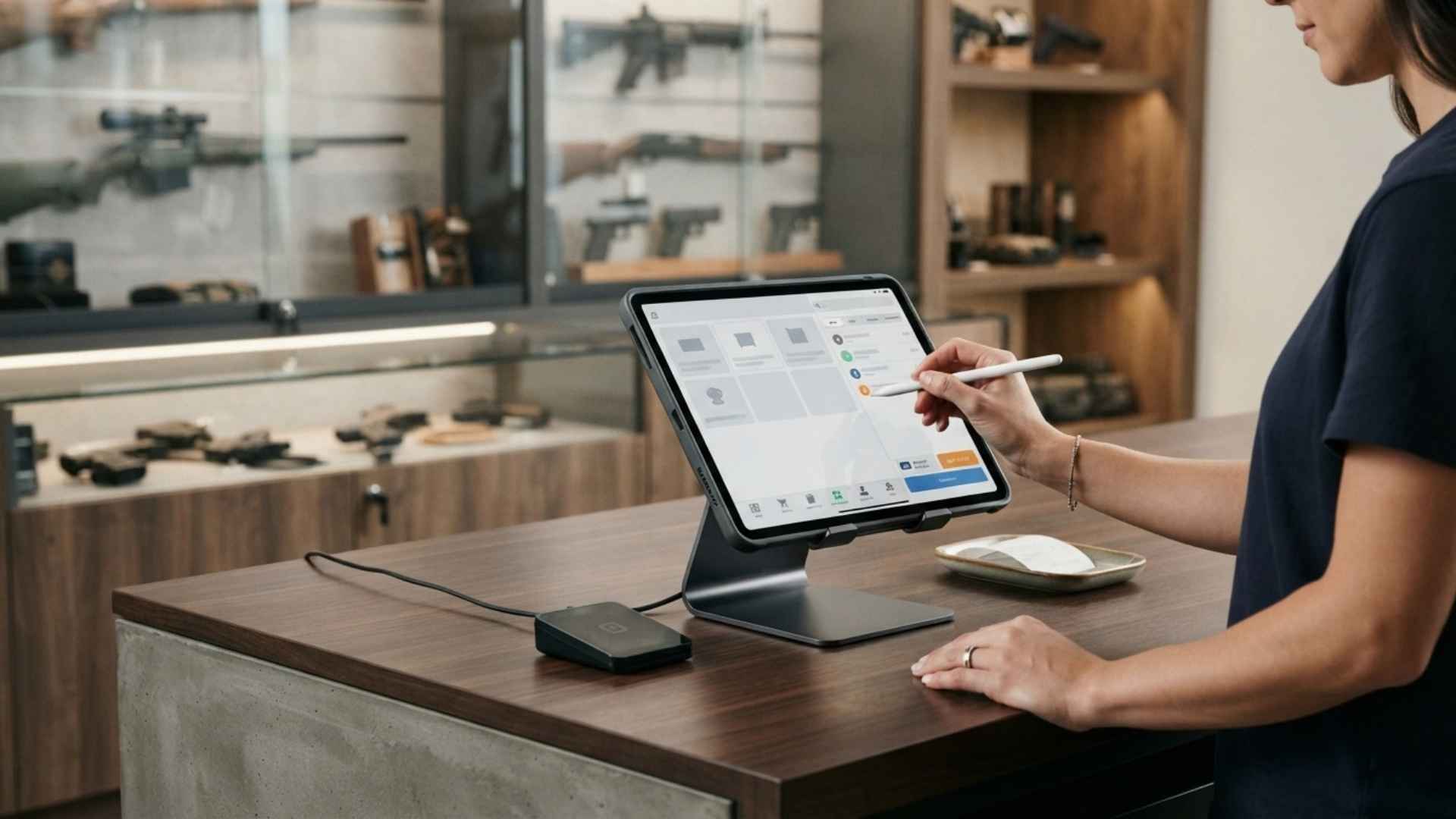
Customers can complete the electronic form 4473 through a supported store device or link-based workflow. Trident 1’s FastBound integration connects the retail transaction with electronic bound book functions and helps reduce repeated data entry.
Trident 1 does not replace the dealer’s responsibility. It helps the dealer carry it out through a more organized, efficient, and repeatable process.
Watch the Full Trigger Point Podcast Episode
Watch the full Trigger Point episode on YouTube to hear host Kevin Wosmansky speak with Jake Newbold and Daniel Peterson about the practical differences between paper and digital Form 4473 workflows. They explain why legibility, missing information, connected records, and employee review matter at the gun counter. The conversation also shows how Trident 1 FFL Software and its FastBound integration can simplify the process without removing the FFL’s responsibility. Watch the complete episode for the full discussion, then explore Trident 1 to see how an integrated workflow can support your store or range.
Frequently Asked Questions
Are Digital ATF Forms 4473 Legal?
Yes. FFLs may use digital completion and retention methods when those methods comply with federal regulations, ATF rulings, form instructions, and technical conditions. Dealers should verify their software, signatures, corrections, access, storage, and backup procedures before relying on a fully digital workflow.
Does a Digital Form Replace the NICS Background Check?
No. Form 4473 records information related to the transfer. NICS or the applicable state background-check process is a separate step used to determine whether the prospective buyer may receive the firearm, unless a recognized exception applies.
Can a Customer Complete Form 4473 on a Tablet?
Yes. A customer may complete the applicable portions on a tablet or another supported device when the dealer’s system follows current requirements. The FFL must still review the form, verify identification, complete its sections, and follow the required background-check process.
Does 4473 Software Guarantee ATF Compliance?
No. Software can flag blank fields, improve legibility, and support a consistent workflow, but it cannot guarantee compliance. The FFL remains responsible for using the current form, reviewing the information, following applicable laws, and retaining accurate records.
Can an FFL Convert Paper Forms to Digital Records?
ATF Ruling 2022-01 permits scanning and electronic retention of certain paper Forms 4473 when all stated conditions are met. Dealers should review the ruling before scanning, indexing, correcting, backing up, destroying, or retrieving existing records.
How Long Must an FFL Keep Form 4473?
Federal regulations generally require a dealer to retain each Form 4473 for at least 20 years after the firearm sale or disposition. Different procedures can apply to denied or cancelled transactions and discontinued businesses.
Should a Gun Store Keep a Paper Backup Process?
Yes. A documented paper backup can help during internet, hardware, or software problems. Staff should know where current forms are stored, how to complete them, and how records created during an outage will be filed or retained.
What Should an FFL Look for in 4473 Software?
Look for current form support, clear customer prompts, employee review controls, secure access, reliable backups, technical support, and integrations with the store’s POS and electronic bound book. The software should reduce duplicate work without hiding compliance steps.