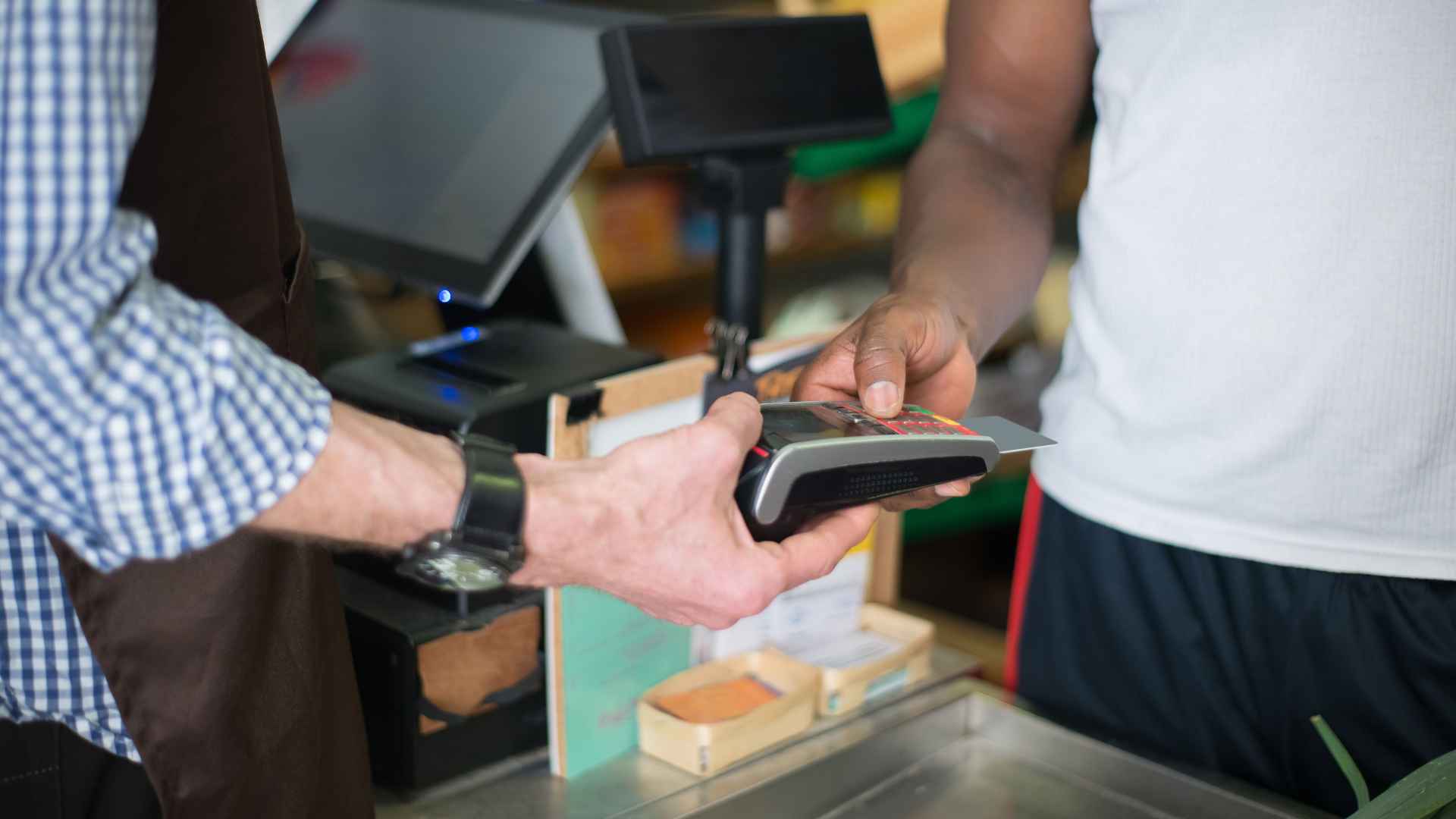
A customer is ready to pay, but the terminal declines the sale. Or a deposit that usually arrives the next day is suddenly on hold. Either problem can slow your counter and leave your team searching for answers. Choosing gun store credit card processing means looking beyond the advertised rate. An FFL needs a provider that understands what the store sells, supports the ways customers pay and helps resolve problems when they happen. Before you sign, check the account terms, total costs, daily workflows, security responsibilities and support.
On Episode 9 of Trigger Point: The FFL Business Podcast, “How Much Does FFL POS Cost?”, Jake Newbold of Trident 1 FFL Software, a Houston, Texas company that builds point-of-sale software for gun stores, shooting ranges and FFL dealers across the United States, put card processing on his checklist for comparing POS quotes. “It’s not only about pricing,” he said, “but making sure you find a software company that works with a true Second Amendment-friendly bank doing the credit card processing.” That is the core of 2A-friendly payment processing, and the checks below help you test it before you sign.
Does the Processor Support Firearms Retail?
Start by confirming that the processor supports firearms retail as you actually run it, because “retail” covers businesses with very different products and sales practices. Tell each prospective provider that you operate under a federal firearms license. Describe everything you sell, including firearms, ammunition, accessories and any range services. If you also take online orders, accept deposits or bill memberships, include those activities.
Ask for written confirmation that the proposed account covers your business as it operates today. A verbal assurance from a sales representative is useful for starting a conversation, but you need to know what the provider will approve when it reviews your application.
It also helps to know who is involved. The company selling you the service may arrange the merchant account and supply the technology. A processor handles transaction activity, while an acquiring bank supports the merchant’s acceptance of card payments. Ask which company makes account decisions and which one your store contacts if a payment or deposit is flagged.
A provider that understands FFL transactions should be able to answer those questions plainly. If its team cannot explain whether your products and sales channels are supported, pause before comparing rates. A cheap quote offers little value if the account does not fit your business. Our guide to why firearms-friendly payment processing matters for FFL dealers covers what can happen when a processor that does not fit stops supporting a store.
How Does Underwriting Affect Your Merchant Account?
Underwriting decides whether a provider approves your account and what the account covers, because it is the provider’s review of your business before approval. Expect questions about your license, products, sales volume and how you accept payments. Complete answers give the provider a more accurate picture of your operation.
Confirm What the Approval Covers
Ask whether the account covers the products and services you actually offer. A store that sells guns and accessories may also run a range, process training fees or collect recurring membership payments. Do not assume approval for counter sales automatically extends to every other activity.
Sales channels matter, too. Find out whether the account permits online checkout, phone orders or payment links if you use them. If you plan to add a range or ecommerce later, ask what information the provider will need before those transactions begin. Get the answer in writing so your team can refer to it as the business grows.
Understand Holds, Reserves and Termination
Read the agreement for funding schedules, reserves and circumstances that could trigger an account review. Ask whether the provider can temporarily hold deposits, what notice it gives and whom you can contact to resolve the issue. Then check the contract length, cancellation terms and any equipment obligations.
No provider can promise that every transaction will be approved or that an account will never be reviewed. What you can evaluate is the process: how the provider communicates, what documentation it may request and how quickly a knowledgeable person can investigate a problem. Those details become especially valuable when funds are tied up and payroll or inventory bills are due.
What Does Gun Store Credit Card Processing Really Cost?
The real cost of gun store credit card processing is the full monthly bill, and the quoted transaction rate is only one part of it. Ask each provider to price a representative month using your actual sales volume, number of transactions and mix of in-person and remote payments. That gives you a firmer basis for comparison than a rate advertised without context.
Request a written breakdown of interchange, processor markup, per-transaction charges, monthly account fees, gateway fees, terminal costs and any PCI-related fees. Check the prices for refunds, chargebacks, early termination and extra locations or registers. If equipment is leased, calculate the full obligation over the lease term.
Interchange deserves particular attention because it is only one component of what a merchant pays. Mastercard explains that interchange rates are generally paid by acquirers to card issuers; they are not the same thing as a provider’s complete processing quote.
Here is a simple comparison. Suppose one quote has a lower percentage rate but adds a monthly gateway charge and a fee for each transaction. Another has a slightly higher percentage with fewer fixed charges. The better deal depends on how much your store processes and how many separate purchases it rings up. A shop with frequent small accessory sales may see a different result from one with fewer, larger transactions.
Ask both providers to show their calculations. Then compare the expected monthly total alongside the contract and service terms. You are choosing a working payment system, not just a number on a proposal.
Which Payment Options Does a Gun Store Need?
A gun store needs a clear payment path for every transaction in a normal week, from a tapped card for ammunition to a deposit on a special order, a gunsmithing bill or a range membership. Walk through that week at your store before requesting a demo.
Check which cards and payment methods the proposed equipment accepts. Ask whether staff can take a payment at the counter, issue an invoice or use a payment link when that fits your business. If you sell online, confirm that the provider approves your specific ecommerce setup and product mix. Do not assume an in-store merchant account includes online processing.
Pay close attention to sales that change after the initial payment. How does a cashier refund a deposit, adjust an order or cancel a charge? Can a manager see the original transaction and the refund together? If a firearm transfer cannot proceed, employees need a way to handle the payment according to store policy and applicable requirements. A payment approval does not authorize a firearm transfer.
During a demo, ask the provider to show your least straightforward transaction. A routine accessory sale tells you whether the terminal works. A deposit, partial refund or membership renewal shows whether the system fits your store.
Why Should Payments Connect to Your POS?
Payments should connect to your POS because a card terminal can approve a charge without telling your point-of-sale system which sale it belongs to. When payment and sales records sit in separate systems, employees may have to enter amounts twice. Managers then spend time matching terminal batches to receipts and investigating differences.
Ask a provider to demonstrate the complete workflow. Have a cashier ring up a sale, collect payment, issue a refund and close the register. Check what information appears in the POS, the processor portal and the end-of-day report. If you have multiple registers or locations, find out whether managers can see results by store without combining spreadsheets.
Integration can also help staff find a payment when a customer calls with a question. The useful test is whether the system connects the transaction details your team needs, accurately and without extra steps. Ask what happens when a terminal loses its connection and how the systems reconcile afterward.
Keep sales reporting separate in your mind from firearms recordkeeping. A clean payment report does not replace the records an FFL must maintain. The ATF’s guide for federal firearms licensees explains acquisition and disposition record requirements. Your payment workflow should support orderly operations while your store follows its required transfer and recordkeeping procedures.
Who Is Responsible for Security and Support?
Responsibility for security and support is split between your store and the companies behind your processing, so get each one named in writing. Ask where card data goes when a customer pays and which company is responsible for protecting it at each step. Find out who supplies and updates terminals, whether staff need to complete security checks, and whom you call if a device is lost or appears to have been tampered with.
PCI DSS applies to merchants regardless of their size or transaction volume. The PCI Security Standards Council says merchants should ask their acquiring bank or payment brand about compliance validation and reporting requirements. Outsourcing payment processing can reduce the requirements that apply directly to your environment, but it does not remove your responsibility to understand what the provider handles.
Support is just as practical. Imagine your terminal stops working during a Saturday rush. Does your store call the POS company, the processor or the terminal vendor? Will that team answer while you are open? Ask the same questions about an unsettled batch, a duplicate charge and a delayed deposit.
For disputes, learn who receives the notice, where you submit evidence and how quickly your team must act. Visa’s merchant dispute guidance is a useful reference when reviewing those procedures. A support promise means more when you know exactly how to reach the people who can solve the problem.
What Should Your Final Provider Checklist Include?
Your final checklist should put the same seven questions to every provider once you have quotes. Keep written answers with each proposal so a low rate does not distract from an important gap.
- Does the provider approve your full product mix and every sales channel you use?
- Who underwrites the account, and who handles a review or funding hold?
- What would a typical month cost after all fees?
- Which terminals, payment methods and refund workflows are supported?
- Can the provider demonstrate a sale from checkout through reporting?
- What security tasks belong to your store?
- Who answers when payments fail during business hours?
The right gun store credit card processing setup should make these answers clear before you commit. If a provider cannot explain how its system handles an ordinary day at your shop, ask for another demonstration or keep comparing.
Keep Payments Working for the Store You Run
Your team has enough to manage without chasing a missing deposit, reentering transactions or guessing whom to call when the terminal fails. Those problems affect customers at the counter and the work waiting after closing.
Trident 1 FFL Software’s firearms-friendly payment options connect processing with a POS built for gun stores and shooting ranges. Bring your current statement and a few real transaction examples to a conversation with the Trident 1 team. Ask them to show you how your sales, refunds and reports would work, and whether the available payment options fit your operation.
Frequently Asked Questions
What Should an FFL Look for in Gun Store Credit Card Processing?
Look for a provider that approves your full product mix and sales channels in writing, prices a typical month after all fees, connects payments to your POS, and names who answers when a payment, batch or deposit fails.
Can a newly licensed FFL apply for a merchant account?
Yes. A new FFL can apply, but approval depends on the provider’s underwriting. Have your license, business details, product list and expected sales volume ready when requesting a quote.
How long does merchant account approval take?
Timelines vary by provider and application. Ask what documents are required, when underwriting begins and whether your store must complete any setup steps before it can accept payments.
Can I keep my current card terminals if I switch providers?
Possibly. Compatibility depends on the terminal model and the new provider’s system. Ask for a device-by-device answer before canceling your existing service or buying replacement hardware.
What happens to recurring payments when I change processors?
Existing billing arrangements may require a migration process or updated customer payment details. Ask both providers what can transfer securely and how to avoid interrupting active memberships.
Can one merchant account cover a gun store and shooting range?
That depends on the provider’s approval and how the businesses are structured. Describe both operations, including rentals, classes and memberships, before assuming one account covers every transaction.
What information should I prepare before requesting a quote?
Gather a recent processing statement, estimated monthly volume, transaction count, average sale amount, sales channels and list of products or services. These details help providers give you a relevant estimate.
Can I accept a deposit before a firearm transfer is completed?
Ask your provider whether its terms permit the deposit workflow. Set a clear store policy for refunds and canceled sales, and complete all required transfer steps before releasing a firearm.